Beschermende atmosfeer betekenis

Bij het verpakken onder beschermende atmosfeer, ook wel MAP of Modified Atmosphere Packaging genaamd, worden gassen aangebracht binnen in de verpakking, waardoor het bederf van voedingswaren en medicatie langzamer gaat dan bij verpakken met gewone lucht. Het verpakken onder een beschermende atmosfeer wordt in het Engels ‘Modified Atmosphere Packaging’ genoemd, meestal afgekort tot MAP. Deze techniek maakt het mogelijk om de bederfprocessen van voedsel te vertragen.
    Beschermende atmosfeer betekenis Wat is verpakken onder beschermende atmosfeer of gasverpakken (MAP)? Bij gasverpakken voegt de flowpack verpakkingsmachine tijdens het verpakkingsproces een inert gas toe aan het product, zoals koolstofdioxide (CO2), stikstof (N2), zuurstof (O2) of een mengsel van gassen.
beschermende atmosfeer betekenis

Modified atmosphere packaging

Learn what modified atmosphere packaging (MAP) is, how it works, and what benefits and drawbacks it has for food products. Find out how MAP can extend shelf life, enhance quality, and prevent spoilage, but also increase cost and risk of contamination. Learn about the definition, benefits, and methods of modified atmosphere packaging (MAP) for fresh produce. Find chapters and articles on low oxygen, high oxygen, and emerging packaging technologies for fresh produce.
    Modified atmosphere packaging Learn about the practice of modifying the internal atmosphere of a package to improve the shelf life of food products. Find out the history, theory, effects on microorganisms and packaging materials of MAP.
modified atmosphere packaging

Map packaging

Learn what modified atmosphere packaging (MAP) is, how it works, and what benefits and drawbacks it has for food packaging. MAP is the practice of manipulating the atmosphere inside packaging containing perishable foods to extend their shelf life and freshness. Learn about the definition, benefits, and methods of modified atmosphere packaging (MAP) for food products, especially fresh produce. Find out how MAP can extend shelf life, maintain quality, and inhibit microbial growth by altering the gas composition inside the package. Map packaging MAP packaging is a process that modifies the air composition inside a package to extend the shelf life of perishable food products. Instead of allowing regular atmospheric air inside, a controlled mixture of gases—such as carbon dioxide (CO₂), nitrogen (N₂), and oxygen (O₂) —is used to slow down spoilage and oxidation.
map packaging

Food preservation technology

Here, we review the advanced food preservation techniques, with focus on fruits, vegetables, beverages and spices. We emphasize electrothermal, freezing and pulse electric field methods because they allow both pathogen reduction and improvement of nutritional and physicochemical properties. Innovative and sustainable food preservation techniques are vital for enhancing food quality, safety, and reducing environmental impact. In this review, the methods aligned with sustainability goals are explored, focusing on their mechanisms, applications, and environmental benefits. Food preservation technology Food preservation by thermal treatment is one of the most often used and known methods for the inactivation of microorganisms and enzymes, both to prevent a risk to public health and to achieve a commercially reliable shelf life for foods. By using thermal food preservation, long shelf-life foods that do not require refrigeration can be produced.
food preservation technology

Controlled atmosphere storage

Learn about the benefits and applications of controlled atmosphere storage (CAS) for extending the shelf-life and quality of food products. Find chapters and articles on CAS for cereals, fruits, vegetables, and more. Learn how controlled atmosphere (CA) is used to store dry commodities and fresh fruit and vegetables by regulating the concentrations of oxygen, carbon dioxide and nitrogen. Find out the history, benefits and examples of CA for different crops.
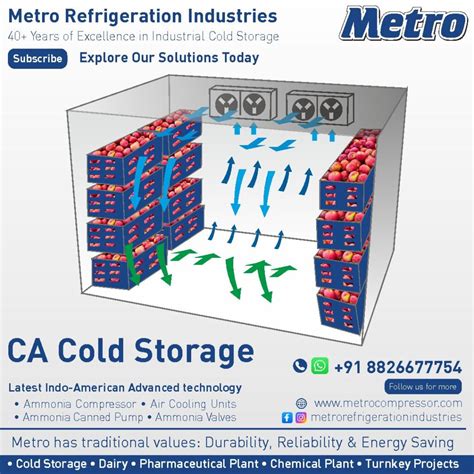
  • Controlled atmosphere storage After harvest, apples can be stored for months in controlled atmosphere storage rooms where the temperature, oxygen, carbon dioxide, and humidity levels are adjusted to put them into.
  • controlled atmosphere storage